
Quick Summary: Understanding faucet types and alternatives empowers you to choose the best fit for your sink, budget, and style, ensuring a functional and attractive kitchen or bathroom. This guide covers common faucet styles, their unique features, and practical alternatives forDIYers.
Hey there, DIY enthusiasts! Bryan Lee here. Ever stood in front of a wall of shiny faucets and felt a little overwhelmed? You’re not alone! Choosing the right faucet can feel like a big decision, impacting both the look and function of your kitchen or bathroom. But don’t worry, it’s simpler than you think. We’re going to break down the different types of faucets and explore some interesting alternatives. By the end, you’ll have the confidence to pick the perfect one for your next project. Let’s dive in and make selecting your next faucet as easy as turning on the tap!
Understanding the Core Components of Faucets

Before we explore the many types of faucets, it’s helpful to know the basic parts that make them work. Think of these as the building blocks, no matter what style you choose. Understanding these can make troubleshooting or even just appreciating your new faucet much easier.
- Spout: This is the part water comes out of. Spouts come in various lengths and heights, affecting how easily you can fill pots or wash your hands.
- Handle(s): These control the water flow and temperature. You’ll see single-handle and double-handle designs.
- Valve: This is the “heart” of the faucet. It’s responsible for regulating how much hot and cold water mixes and to what temperature, as well as turning the water flow on and off. Common valve types include cartridge, ceramic disc, and ball valves.
- Aerator: This small, screw-on cap at the tip of the spout mixes air with water. It reduces water flow, saves water, and prevents splashing, giving you a smooth stream.
- Base: This is where the faucet connects to the sink or countertop. It often includes a decorative escutcheon plate if needed to cover extra holes.
Common Types of Faucets Explained

Faucets aren’t just about style; they’re designed for specific functionality. Let’s look at the most common types you’ll encounter. Knowing these will help you match a faucet to your needs.
1. Single-Handle Faucets
These are incredibly popular for their simplicity and ease of use. With just one handle, you can control both water flow and temperature. A simple lift and turn motion is all it takes.
Pros:
- Easy to operate, especially with one hand.
- Great for kitchens where your hands might be full or messy.
- Takes up less deck space.
- Often more budget-friendly.
Cons:
- Can be trickier to find the exact perfect temperature compared to double handles.
- If the internal valve fails, you might lose control of both hot and cold.
2. Double-Handle Faucets
The classic choice! Double-handle faucets have separate handles for hot and cold water. This design allows for precise temperature control.
Pros:
- Excellent control over water temperature.
- Classic and traditional aesthetic.
- If one handle’s valve needs repair, the other can still function.
Cons:
- Requires two hands to operate.
- Can be less convenient in busy kitchens.
- Takes up more space around the sink.
3. Centerset Faucets
A common option for bathrooms, centerset faucets have three holes: one for the spout and two for the handles. These components are all connected on a single base and are designed to fit sinks with a 4-inch on-center setup.
Pros:
- Easy to install as a single unit.
- Fits standard 4-inch sink hole configurations.
- Often more affordable.
Cons:
- Limited style and design options compared to other types.
- Spout height might be lower than desired for some sinks.
4. Wall-Mount Faucets
Instead of mounting on the sink or countertop, these faucets are installed directly into the wall behind the sink or tub. They offer a sleek, modern look and can free up deck space.
Pros:
- Creates a minimalist, uncluttered look.
- Easy to clean around the sink area.
- Can accommodate deep sinks where deck-mounted spouts might be too short.
Cons:
- Installation can be more complex, requiring plumbing inside the wall.
- Repairs might necessitate opening the wall.
- Usually more expensive due to installation complexity.
5. Pull-Down and Pull-Out Faucets
These are especially popular in kitchens. They feature a spray head that can be pulled down or pulled out of the spout for greater reach and flexibility when washing dishes or cleaning the sink. Pull-down faucets have a spout that arcs downwards, while pull-out faucets have a more straight spout.
Pros:
- Exceptional versatility for rinsing and cleaning.
- Often come with multiple spray functions.
- Modern and highly functional design.
Cons:
- Can be more expensive.
- The hose mechanism can sometimes be prone to wear over time.
- The spray head can drip if not fully retracted.
6. Commercial-Style or Professional Faucets
Inspired by restaurant kitchens, these faucets are known for their high arc, flexible spring-spout, and powerful spray. They’re built for heavy-duty use and add a professional touch to any kitchen.
Pros:
- Extremely durable and built for high-volume use.
- Impressive reach and functionality.
- Distinctive, modern aesthetic.
Cons:
- Can be significantly more expensive.
- The industrial look might not suit all kitchen styles.
- Can be bulky and may overwhelm smaller sinks.
Alternatives to Traditional Faucets

While standard faucets are fantastic, sometimes a different approach is needed. These alternatives offer unique solutions for specific needs or aesthetic preferences. They might involve a different way of dispensing water or a completely different fixture altogether.
1. Touch Faucets (Hands-Free Faucets)
Touch faucets offer the ultimate convenience. With a simple touch anywhere on the spout or handle (depending on the model), you can turn the water on and off. Many also have a temperature control handle that stays set, so your touch activates only the flow.
How they work: These faucets typically use a battery-powered solenoid valve. A sensor detects touch or motion, activating the valve to release water. Some advanced models also have voice activation or proximity sensors.
Pros:
- Unparalleled convenience, especially when hands are dirty or full.
- Hygienic – reduces touching surfaces.
- Water-saving, as you don’t forget to turn them off.
- Modern, sleek look.
Cons:
- Higher cost than traditional faucets.
- Requires batteries or an electrical connection.
- Can sometimes be accidentally activated.
- Installation can be more complex.
2. Pot Filler Faucets
These are typically mounted on the wall above the stovetop. Their sole purpose is to fill pots with water without having to carry them from the sink. They are a luxury that can greatly improve kitchen workflow.
How they work: Pot fillers are essentially small, usually single-handle faucets installed with their own water supply line. They are designed to be close to the heat source and the primary cooking area.
Pros:
- Highly convenient for cooks who use a lot of large pots.
- Reduces strain from carrying heavy water-filled pots.
- Adds a professional, high-end feel to the kitchen.
Cons:
- Requires an additional water line installation during construction or renovation.
- Generally an aesthetic and convenience feature rather than a necessity.
- Can be an added expense.
The National Kitchen & Bath Association (NKBA) often highlights innovative kitchen features that enhance functionality and aesthetics, and pot fillers are frequently discussed in their trend reports.
3. Filtered Water Faucets
These are often installed as a secondary faucet next to a main kitchen faucet. They provide access to purified water directly from your sink, eliminating the need for bottled water or separate filter pitchers. The water is typically filtered through a countertop or under-sink filter system.
How they work: A separate water line connects a filtered water system to this dedicated faucet. When you turn it on, water from the filter unit flows through.
Pros:
- Convenient access to clean, filtered drinking water.
- Reduces plastic waste from bottled water.
- Can be more cost-effective long-term than buying bottled water.
Cons:
- Requires space for the filter system (often under the sink).
- The filter cartridges need periodic replacement, adding an ongoing cost.
- Installation involves an extra plumbing line.
For information on water filtration and its importance, you can consult resources from the U.S. Environmental Protection Agency (EPA) regarding drinking water quality and treatment options.
4. Touchless Soap Dispensers
While not a faucet, a touchless soap dispenser is often paired with a faucet to create a fully touch-free or augmented washing experience. These are battery-operated and dispense soap with a motion sensor.
How they work: Similar to touch faucets, a sensor detects your hand and activates a pump to dispense liquid soap.
Pros:
- Hygienic and convenient.
- Reduces soap waste.
- Modern look.
Cons:
- Requires batteries.
- Needs refilling with liquid soap.
- May activate unintentionally.
Choosing the Right Faucet: Key Considerations

Now that you know the different types and alternatives, how do you pick the perfect one? Here are some factors to consider to make sure your choice is a good one.
1. Your Sink Type and Hole Configuration
This is the most crucial starting point! Your sink dictates what kind of faucet you can install. Most sinks are pre-drilled with a specific number of holes:
- Single Hole: Can usually accommodate single-handle faucets, or some pull-down/pull-out types.
- Centerset (4-inch): Designed for centerset faucets.
- Widespread (8-inch or more): These sinks have separate holes for handles and spout, allowing for a more spread-out setup, often used with double-handle faucets.
- No Holes: For countertops where you plan to use a wall-mount faucet.
Always measure the distance between the holes to ensure compatibility. Resources like those from the Home Builders Institute often detail sink and faucet installation specifics.
2. Your Usage Needs
Think about how you use your sink the most.
- Kitchen: If you cook a lot, a pull-down or pull-out faucet with a high arc is very practical. For ultimate convenience, a touch faucet might be a dream.
- Bathroom: Ease of use and aesthetics often take precedence. A single-handle faucet is great for quick hand washes, while a double-handle offers refined temperature control.
- Utility Sink: Durability and functionality are key. A simple, robust faucet is usually best here.
3. Ease of Installation
Are you a seasoned DIYer or a first-timer? Some faucets, like centersets, are designed for simpler installation. Others, like wall-mount or touch faucets, might require more advanced plumbing knowledge and potentially professional help.
4. Style and Finish
The faucet is a key design element. Consider:
- Finish: Chrome, brushed nickel, stainless steel, matte black, oil-rubbed bronze are popular choices. Match or complement your other hardware (cabinet pulls, light fixtures).
- Style: Modern, traditional, transitional, minimalist? The faucet should harmonize with your overall decor.
5. Budget
Faucets range from under $50 to over $500. Set a realistic budget based on your needs and wants. Remember to factor in any potential installation costs if you’re not doing it yourself.
Faucet Valve Systems: A Quick Look
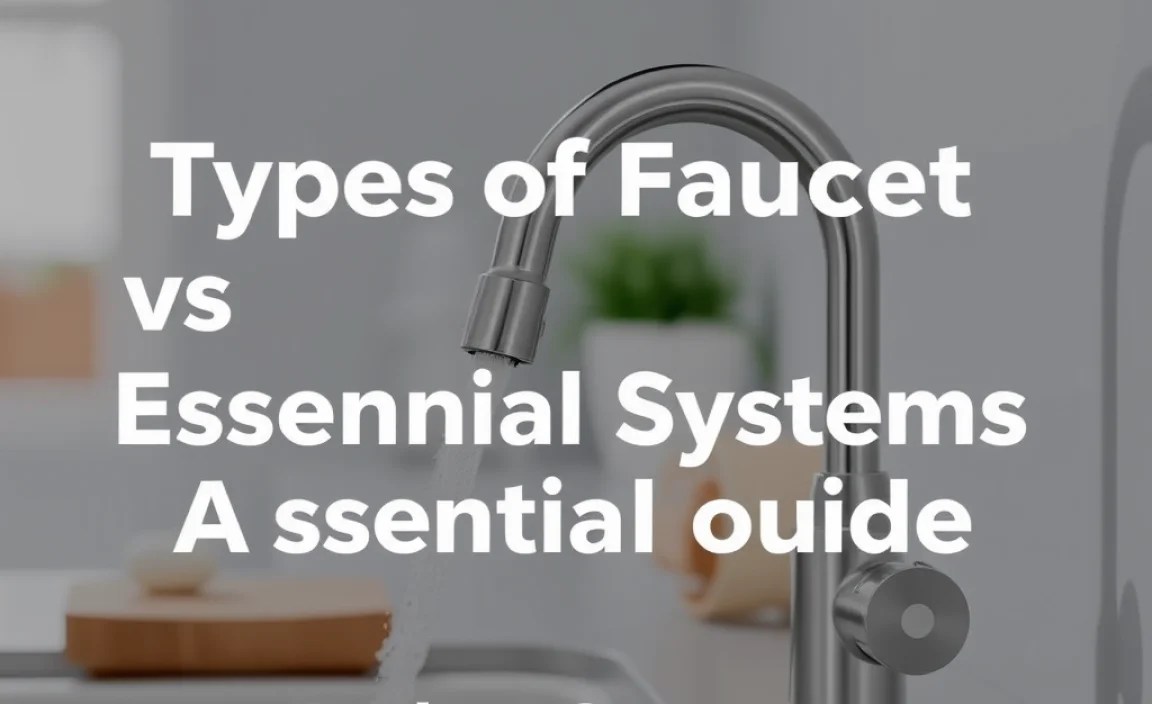
The valve system inside your faucet is what controls the water. The type of valve significantly impacts durability and how smoothly the faucet operates. While manufacturers use various proprietary names, most fall into a few main categories:
| Valve Type | Description | Pros | Cons | Typical Valve Lifespan |
|---|---|---|---|---|
| Cartridge Valve | A removable stem that controls water flow up and down. Can be single or double handle. | Good control, durable if well-maintained. | Can wear out over time, may require periodic replacement. | 10-15 years |
| Ceramic Disc Valve | Essentially two ceramic discs that slide against each other to control water. Very durable. | Extremely durable, smooth operation, excellent sealing. | Can be more expensive initially. | 20+ years |
| Ball Valve | A rotating ball with openings that align with water ports. Often found in older faucets or some kitchen styles. | Simple mechanism, easy to replace parts. | Can be prone to leaky seals over time, less precise temperature control. | 5-10 years |
| Compression Valve | The oldest type. Uses a rubber washer that compresses to stop water flow. Often found in two-handle utility faucets. | Simple, inexpensive, easy to repair with washer replacement. | Washers wear out relatively quickly, can develop drips. | 2-5 years (washer replacement needed more often) |
Ceramic disc valves are generally considered the most durable and reliable for modern faucets, offering long-lasting performance with minimal fuss. For detailed plumbing comparisons, you might find resources from the Plumbing-Heating-Cooling Contractors Association (PHCC) informative.
DIY Installation Tips for Beginners
Ready to tackle faucet installation? Here are some tips to make it smoother:
- Turn Off the Water: Crucial first step! Locate the shut-off valves under the sink for hot and cold water. Turn them clockwise until snug. If you don’t have valves under the sink, you’ll need to turn off the main water supply to your house. Always test by turning on the old faucet to ensure the water is off.
- Gather Your Tools: You’ll likely need an adjustable wrench, basin wrench (especially for tight spaces under the sink), plumber’s putty or tape, a bucket for dripping water, and possibly a screwdriver.
- Read the Instructions: Every faucet is a bit different. Carefully read the manufacturer’s installation guide before you start.
- Remove the Old Faucet: Disconnect the water supply lines from the old faucet. Loosen the mounting nuts holding it in place under the sink using your wrench. Then, lift the old faucet off from above.
- Clean the Sink Surface: Remove any old putty or debris from where the old faucet sat. A clean surface ensures a good seal for the new faucet.
- Install the New Faucet: Follow the manufacturer’s directions. This usually involves applying plumber’s putty or a gasket to the faucet base, threading it through the sink holes, and securing it from underneath with mounting nuts.
- Connect Water Lines: Attach the new hot and cold water supply lines to the faucet tails and to the corresponding shut-off valves. Tighten snugly but don’t overtighten.
- Turn Water On and Test: Slowly turn the shut-off valves back on. Check for any leaks around the connections and at the faucet base. Turn on the faucet.
